2025
Journal of American Statistical Association
pp. 1-12
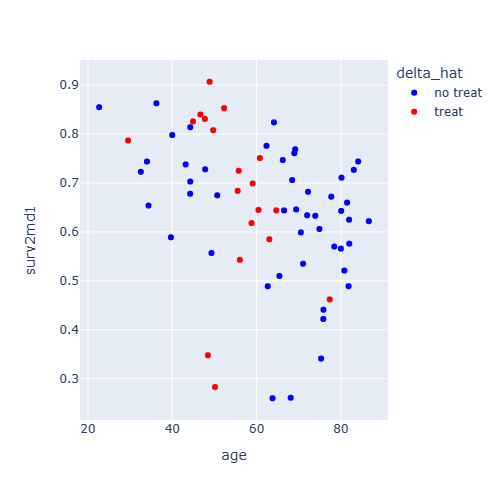
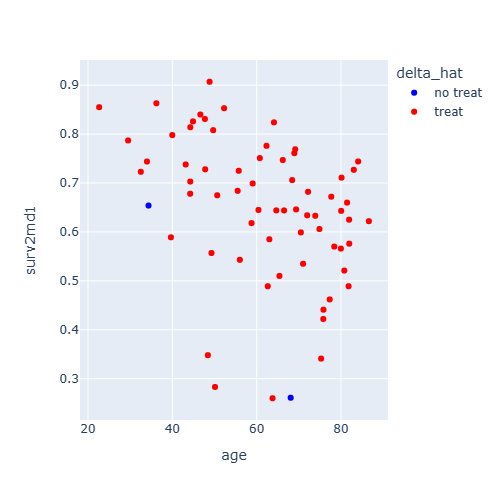
Most work on treatment choice and policy learning focuses on utilitarian welfare (i.e., average welfare), which can be sensitive to skewed heterogeneity. We propose a robust policy learning framework that enables the policymaker to act with prudence/negligence and to be influenced by vote shares.
A Computational Approach to Identification of Treatment Effects for Policy Evaluation︎︎︎
with Shenshen Yang
arxiv︎︎︎ matlab codes︎︎︎
2024
Journal of Econometrics
Vol. 240, 105680
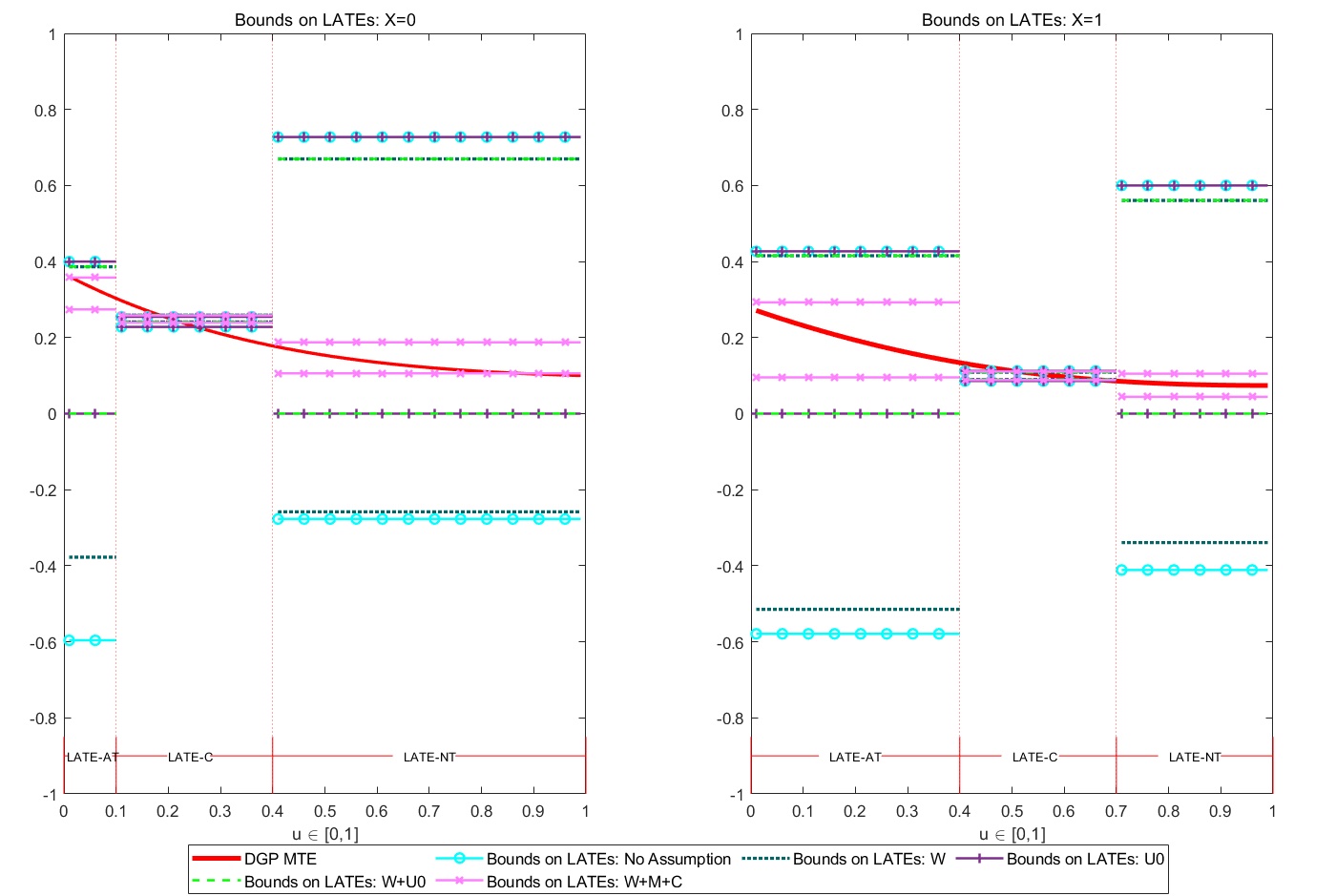
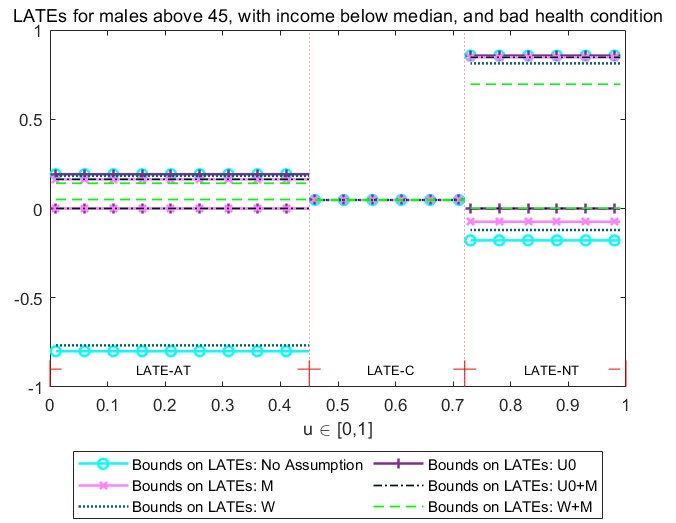
We propose a computational framework to calculate sharp nonparametric bounds (using binary IV that satisfies full independence) on various policy-relevant treatment parameters that are defined as weighted averages of the MTE.
Optimal Dynamic Treatment Regimes and Partial Welfare Ordering︎︎︎
supplement︎︎︎ matlab codes & data︎︎︎ working paper︎︎︎ slides︎︎︎
2023
Journal of American Statistical Association
Vol. 119, pp. 2000-2010
*Editor’s Choice 2023
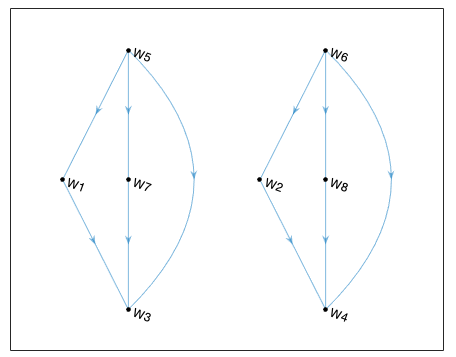
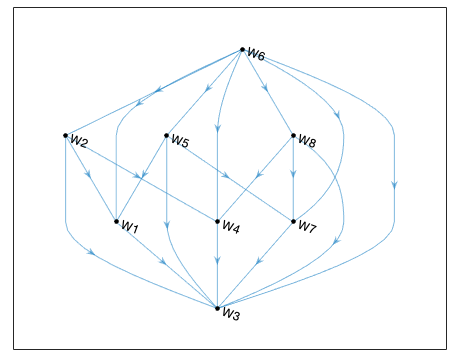
We partially identify the optimal dynamic regime from observational data, relaxing sequential randomization but instead using IVs. As a first step, we establish the sharp partial ordering of welfares, which summarizes the signs of dynamic treatment effects.
2023
Journal of Econometrics
Vol. 234, pp. 732-757
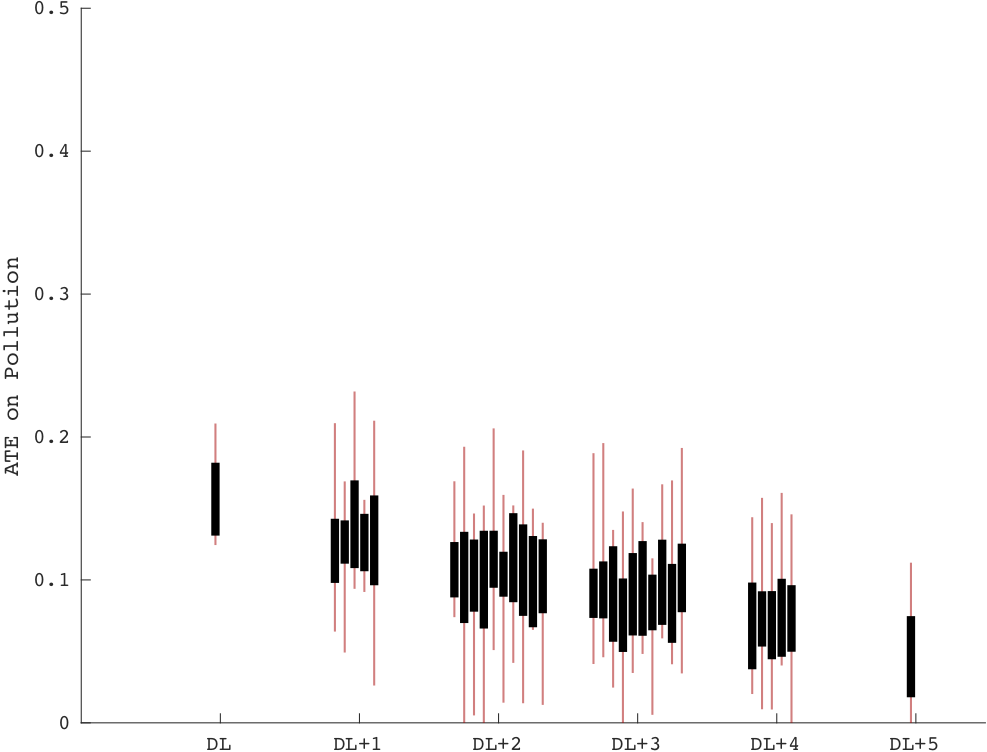
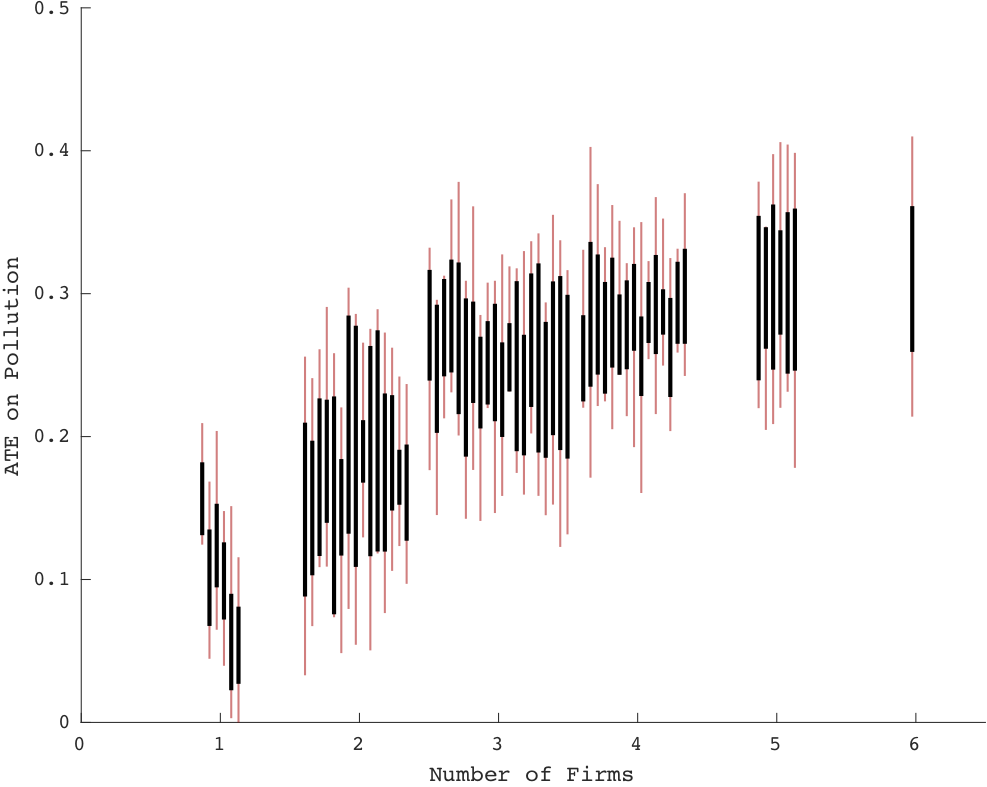
Treatments are determined by strategic interaction, which poses interesting identification problems.
![]()
![]()